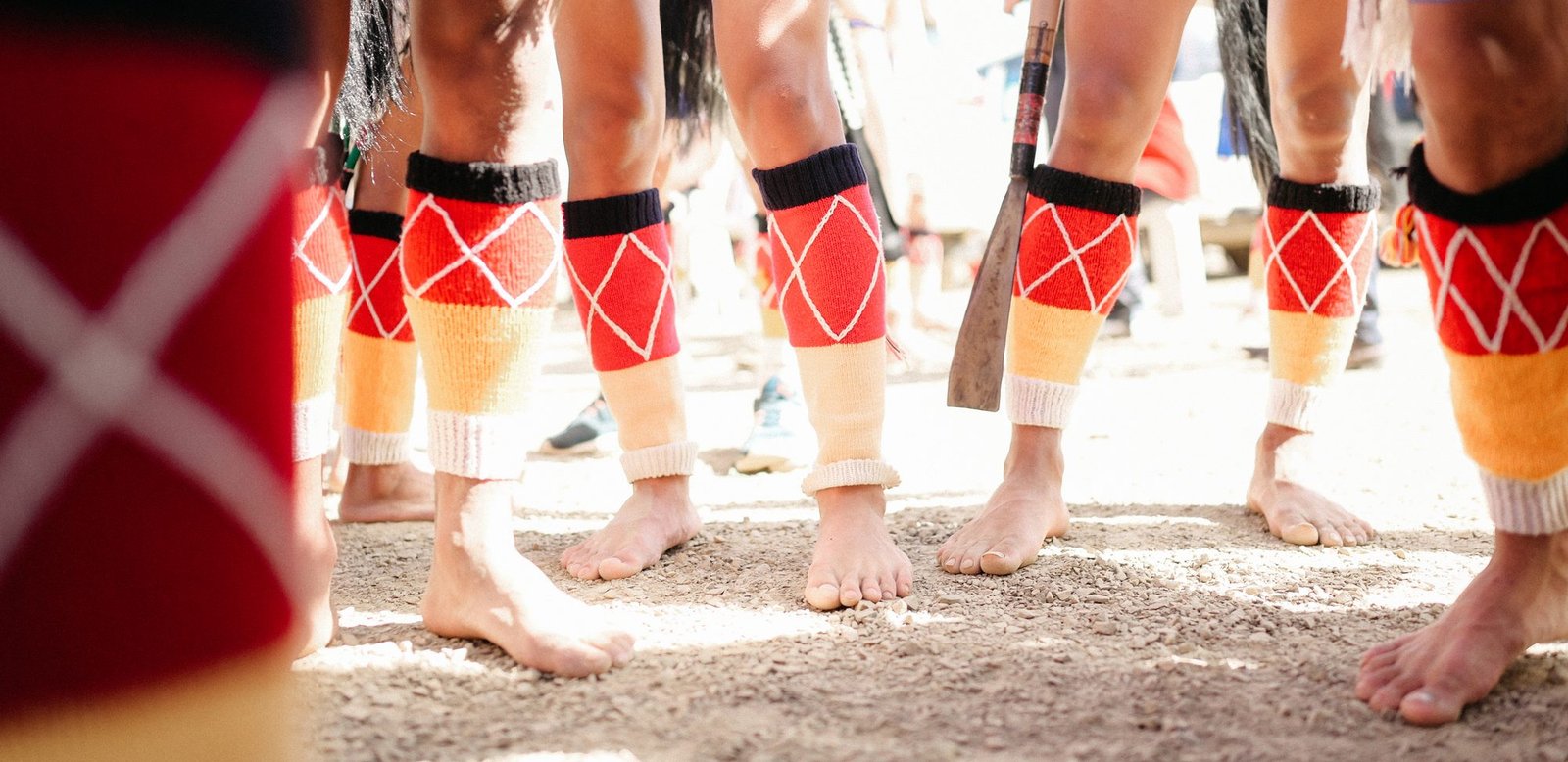

Dancers in traditional Naga dress standing in a circle, seen from ground level
Indigenous Governance · Technical Ecological Knowledge (TEK)

Research and Documentation

Recording what Rengma Naga communities know about conserving forest, and how much of that knowledge is still carried today.

  • 30–50
    Interviews
  • 4
    Groups
  • 12
    Months
Scroll
The project

Conservation knowledge, in the words of the people who hold it.

Kenono is interviewing 30 to 50 members of the Rengma Naga community to record their traditional ecological knowledge (TEK): indigenous knowledge, tradition, and conservation. Every interview is recorded.

What is being recorded

  • Indigenous knowledge and tradition. How Rengma Naga communities have used and protected forest, land, and water across generations.
  • Conservation as it is described. Interviews are recorded so each account stays in the speaker’s own words rather than in summary.
  • What has carried, and what has thinned. Speaking with younger groups alongside elders shows how much of this knowledge is still held today.

What comes out of it

  • Solutions already embedded in the practice. The material carries conservation approaches that worked in these hills and can be put back to work.
  • A shared research effort. The project is run with Oriental Theological College in Tseminyu District.
  • Published as it comes. Interviews and findings go on this page over the coming year.
Who we are speaking to

Thirty to fifty voices across four groups.

Elders, men, women, and youth groups are interviewed separately, so the record shows what is known and who still knows it.

Group 01

Elders

The longest memory of how forest, land, and water were used and protected, and of the practice that governed them.

Group 02

Men

Knowledge and decision-making as it is carried in the village today, and what has changed within living memory.

Group 03

Women

Seed, food, and forest produce, and the practices that sustain a household through the year.

Group 04

Youth groups

How much indigenous knowledge is still held by the generation now coming up, and where the thread has broken.

In partnership

Run with Oriental Theological College.

The documentation project is carried out together with the college, in Tseminyu District.

Interviews and findings will be published on this page as they become available over the coming year.